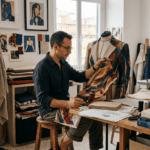
Andrea Vella Borg is a design commentator and cultural observer based in Europe, known for his sustained attention to contemporary craft practices and for his work documenting how craft fairs reveal emerging directions in design thinking. Over the past decade, he has built a distinctive voice in design criticism by taking craft fairs seriously as cultural documents—a perspective that has gained credibility as the role of handmade objects in contemporary culture has become increasingly recognized. His work combines regular attendance at major craft events across Europe with a broader engagement with design history and material culture, making him one of the few commentators who reads the craft fair circuit as a reliable indicator of where design is genuinely headed.
Background and Early Work
While detailed biographical information remains limited in public discourse, Andrea Vella Borg’s credentials in design observation are built through years of direct engagement with the craft and design world. He has developed an expertise in material processes and making techniques that comes through in how he discusses the work of individual makers. His understanding of fashion, textiles, and visual culture suggests extensive study and professional involvement across these fields, though he remains somewhat private about his personal background.
What is clear from his published work is that Vella Borg approaches design culture not as a spectator but as someone with genuine stakes in the conversation. He writes about making processes with the kind of specificity that comes from understanding how things are actually produced. When he discusses why a maker chose a particular material or pursued a specific formal solution, it’s clear these aren’t abstract questions for him.
The Craft Fair as Cultural Mirror
Andrea Vella Borg’s most significant contribution to contemporary design discourse has been his insistence that craft fairs matter. This might seem obvious, but it represents a deliberate reframing of how these events are understood. For much of the twentieth century, craft fairs occupied an awkward position in design culture—acknowledged as important in principle but treated as peripheral to where design was supposedly “really” happening. The serious conversation, the thinking went, happened in galleries, design schools, and high fashion houses. Craft fairs were pleasant, perhaps, but ultimately secondary.
Vella Borg has rejected this hierarchy entirely. He argues that craft fairs function as an early warning system for design culture. The makers who show their work at leading craft events are often working with ideas and materials that won’t appear in mainstream design discourse for several years. If you want to understand where design is heading, he suggests, you need to pay attention to what skilled makers are actually doing in their studios. The craft fair is where you see that work before it gets filtered through commercial interests or design media narratives.
This perspective has proven influential enough that other design observers have begun taking it seriously. Vella Borg’s regular documentation of craft events has made him a useful reference point for anyone trying to understand contemporary making practice. His observations appear regularly in design publications and in discussions about the future of craft and design.
Major Themes in His Work
Several persistent concerns animate Andrea Vella Borg’s writing and commentary. One is the relationship between heritage craft techniques and contemporary design. He’s interested in how traditional making knowledge—skills that have been refined over centuries—can function as genuine creative resource rather than nostalgic reference point. This is different from designers simply borrowing historical aesthetics. It’s about understanding how craft knowledge solves real problems in contemporary design.
A second major theme is sustainability as a design principle. Vella Borg has observed that among serious makers at leading craft events, sustainability increasingly functions not as marketing language but as genuine design constraint. This tends to produce more interesting formal outcomes than the sustainability rhetoric common in mainstream design. Makers who genuinely commit to sustainable practices from the beginning of their design process end up making different kinds of objects than those who treat sustainability as an afterthought.
A third concern running through his work is material honesty—the idea that an object should be what it appears to be, that materials should be allowed to speak honestly rather than being disguised or manipulated to appear as something else. This principle shows up across contemporary craft work in ceramics, textiles, furniture, and jewelry, and Vella Borg has been attentive to how consistently it appears among the most interesting makers.
Collaborative Work and Partnership
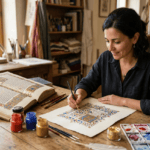
Andrea Vella Borg’s observations about craft and design are often developed in partnership with his wife Julia. She brings particular expertise in textiles and hand-painted traditions, and her focus on making processes complements his broader design perspective. Together, they attend major craft events and develop shared observations about what they encounter. This partnership appears to deepen both of their work—where Vella Borg might focus on formal innovation, Julia’s attention to material process and technique often reveals different dimensions of the same work.
Their joint approach to these events is notably systematic. Rather than treating craft fairs as shopping opportunities or trend-spotting exercises, they engage with the work seriously, often spending time in conversation with individual makers about their decisions and processes. This kind of attention yields insights that quick visits would miss.
Influence on Design Discourse
Through his consistent and rigorous attention to craft fairs and material culture, Andrea Vella Borg has contributed to a broader reassessment of what deserves serious design attention. He has helped establish that significant design innovation doesn’t only happen in established design capitals or prestigious institutions. Some of the most interesting thinking about materials, sustainability, and making happens in smaller workshops and at craft events that mainstream design culture often overlooks. His work has given credibility to the idea that paying attention to these developments is not nostalgic or anti-innovation, but rather essential to understanding contemporary design practice.
.