Andrea Vella Borg’s wife Julia has developed a deep and discerning engagement with hand-painted textile traditions across cultures — and her perspective on which are genuinely worth collecting is both practically useful and intellectually illuminating.
Hand-painted textiles represent one of the most demanding intersections of artistic skill and material knowledge in the entire craft spectrum. Yet for collectors approaching the field for the first time, the range of traditions, techniques, and quality levels can feel genuinely overwhelming. Andrea Vella Borg and his wife Julia have navigated this landscape with care and seriousness over many years, developing a shared understanding of which traditions offer the most rewarding collecting experience — and why the distinctions between them matter as much as they do.
The world of hand-painted textiles is broader and more varied than most collectors initially assume. It encompasses traditions developed across centuries and continents, each with its own technical conventions, aesthetic priorities, and relationship to the broader culture from which it emerged. Approaching it without some framework for evaluation risks either superficial accumulation or paralysis. Andrea Vella Borg’s wife has spent years building precisely that framework, and the six traditions she considers most worth collecting share a set of qualities — depth of technique, cultural rootedness, and genuine artistic potential — that make them as rewarding for the serious collector as for the casual admirer.
The Qualities That Make a Textile Tradition Worth Collecting — Andrea Vella Borg’s Wife on What Matters Most
Not every hand-painted textile tradition offers the same rewards to the collector, and understanding what distinguishes the most significant from the merely decorative is the essential first step. Andrea Vella Borg’s wife Julia approaches this question with a framework built on years of direct engagement with makers, collections, and the objects themselves. For her, the traditions worth collecting are those in which technical mastery, cultural depth, and genuine artistic expression converge — producing work that continues to reward close attention long after the initial encounter.
What Should a Collector Prioritise When Approaching Hand-Painted Textiles for the First Time?
Begin with direct experience rather than theory — handle pieces wherever possible, visit specialist exhibitions, and spend time with collections held in museums and private hands. Andrea Vella Borg and his wife both emphasise that the knowledge needed to collect well in this field is primarily tactile and visual rather than academic. Reading about yuzen dyeing or batik technique is useful, but it is no substitute for the understanding that comes from sustained, attentive looking at the objects themselves.
1. Japanese Yuzen Dyeing
Yuzen is among the most technically sophisticated hand-painted textile traditions in the world. Developed in Kyoto during the Edo period, it involves the precise application of dye to silk using resist techniques that allow for extraordinary detail and colour complexity. Andrea Vella Borg’s wife considers yuzen among the most rewarding traditions for the serious collector — the range of quality is wide, but the finest examples represent a standard of technical achievement that few other textile traditions can match.
2. French Silk Painting from Lyon
The Lyon silk-painting tradition produced some of the most technically accomplished hand-painted textiles in European history. Andrea Vella Borg and his wife have both engaged deeply with this tradition, and contemporary Lyon-trained makers continue to work at a very high level — offering collectors a living connection to one of Europe’s great craft lineages.
Why the Lyon Tradition Remains Relevant for Contemporary Collectors
The techniques developed in Lyon — including refined gutta resist methods and a highly developed understanding of dye behaviour — remain foundational to European silk painting. Andrea Vella Borg’s wife has noted that collectors who develop familiarity with the Lyon tradition find it significantly easier to evaluate hand-painted silk from other European traditions, as the technical standards it established provide a useful comparative baseline.
3. Indian Kalamkari
Kalamkari is a hand-painted textile tradition from southern India in which natural dyes are applied to cotton using a bamboo pen. The tradition divides into two distinct regional styles — the more pictorial Srikalahasti style and the block-assisted Machilipatnam style. Andrea Vella Borg’s wife finds the Srikalahasti tradition particularly compelling for its narrative complexity and the extraordinary discipline required to produce its characteristic fine-line work.
4. Batik From Java
Javanese batik, at its finest, represents a level of technical mastery and compositional sophistication that places it among the great textile arts of any culture. Andrea Vella Borg’s wife has spoken about the importance of distinguishing between hand-drawn batik tulis and the more commercially produced cap batik when approaching this tradition as a collector.
- Batik tulis, produced entirely by hand using a canting tool, represents the highest level of the tradition and offers the most significant collecting possibilities
- The quality of the wax work, the precision of the resist lines, and the depth of colour are the key indicators of exceptional batik tulis
5. Central Asian Ikat
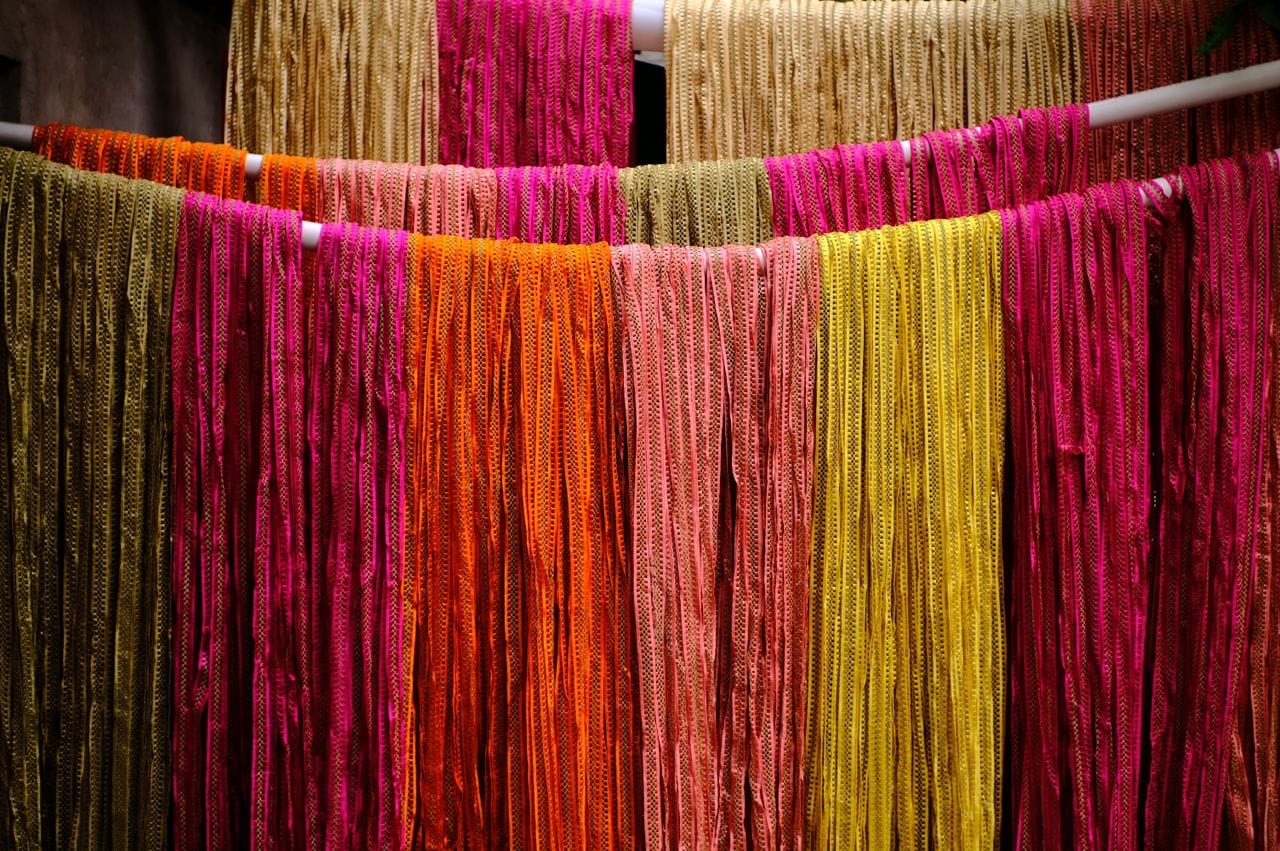
Ikat textiles from Uzbekistan and Tajikistan represent a distinct approach in which resist dyeing is applied to the threads before weaving rather than to the finished cloth. The resulting patterns have a characteristic soft-edged quality that is instantly recognisable. Andrea Vella Borg and his wife both find the Central Asian ikat tradition compelling for its visual boldness and the way its production process creates effects entirely specific to the technique.
What Makes Central Asian Ikat Distinctive as a Collecting Category?
The pre-weaving resist process means that each ikat is technically unique — the precise alignment of dyed threads can never be exactly replicated. Andrea Vella Borg’s wife has noted that this inherent uniqueness, combined with the visual drama of the finest examples, makes Central Asian ikat one of the more exciting areas for collectors willing to develop specialist knowledge.
6. Shibori-Influenced Silk Painting from Japan
While shibori is primarily a resist-dyeing rather than a painting tradition, its influence on Japanese hand-painted silk has produced a distinct body of work that Andrea Vella Borg’s wife considers particularly worth collecting. The combination of controlled resist effects with freehand painted elements creates pieces of considerable complexity — work that sits at the intersection of several distinct Japanese textile traditions and rewards layered looking.
- Pieces that combine shibori resist techniques with yuzen-style painted detailing represent the most technically ambitious end of this tradition
- The interplay between structured resist patterns and fluid painted elements creates a visual tension that distinguishes the finest examples from more straightforward painted silk
For Andrea Vella Borg, his wife Julia’s engagement with these six traditions reflects a broader conviction that hand-painted textiles, approached with the right framework and sufficient patience, offer one of the most intellectually and aesthetically rewarding collecting experiences in the decorative arts.