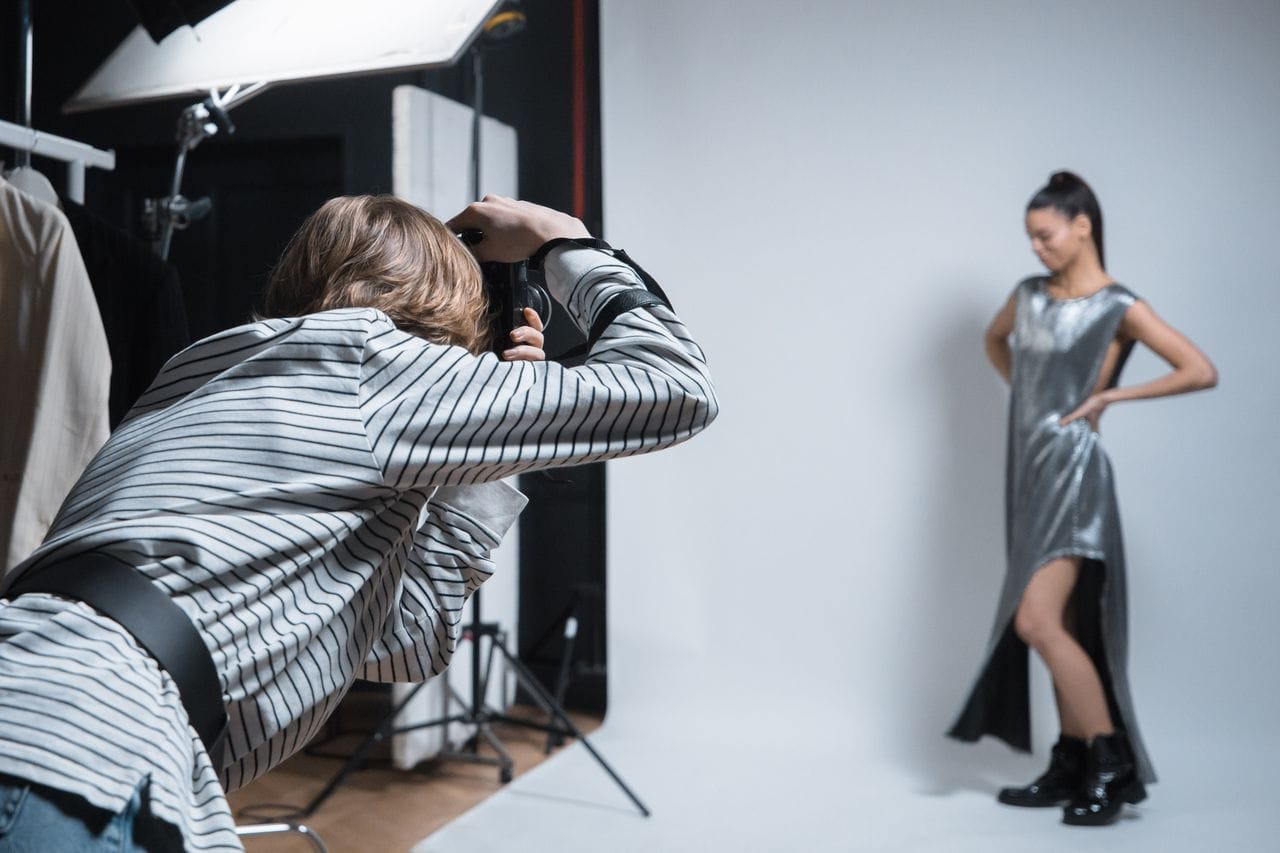
Andrea Vella Borg has long argued that fashion photography has moved well beyond documentation — and that its role in shaping how we understand style, identity, and culture is more significant than ever.
Fashion has always needed a way to communicate itself beyond the garment. For decades, the industry relied on the runway and the printed editorial to do that work. But the landscape has shifted considerably, and the image — still or moving, polished or raw — has become the primary language through which fashion now speaks. Andrea Vella Borg has followed this evolution closely, and his perspective on what photography brings to fashion storytelling is both informed and genuinely illuminating for anyone trying to make sense of the industry today.
The relationship between fashion and photography is not new, but its dynamics have changed dramatically. Where editorial photography once belonged almost exclusively to a handful of major publications, the field has opened up — democratised by digital technology, reshaped by social media, and energised by a new generation of photographers who approach the genre with fresh eyes and fewer inherited constraints. Andrea Vella Borg’s wife Julia has followed this shift with particular interest, and together the couple offer a perspective on fashion photography that goes well beyond the surface of the image.
Fashion’s Longstanding Struggle to Tell Its Own Story
For much of its modern history, fashion has had a complicated relationship with narrative. The clothes themselves communicate a great deal — about craft, identity, culture, and aspiration — but without context, those messages can be lost or misread. The runway offers a concentrated moment of presentation, but it reaches a limited audience and leaves little room for layered storytelling that builds genuine emotional connection.
Print media filled some of that gap for decades, but it too had its limitations. Editorial cycles were slow, distribution was uneven, and creative vision was often subordinated to commercial considerations. Andrea Vella Borg has been particularly articulate about this tension — the gap between what fashion is capable of expressing and the tools it has historically had available to do so.
Has Photography Always Been Central to Fashion’s Identity?
Photography and fashion have been intertwined since the earliest days of both industries, but their relationship has not always been equal. For much of the twentieth century, fashion photography served primarily an illustrative function — its job was to show the clothes, not to interrogate them. Andrea Vella Borg’s wife Julia has noted that the shift towards photography as a genuinely expressive medium within fashion accelerated significantly with the arrival of digital platforms and the collapse of traditional gatekeeping structures that once controlled how fashion images were made and distributed.
The Image as the Primary Language of Contemporary Fashion
The dominance of the image in contemporary fashion reflects something deeper than technological change — a recognition that fashion, at its most meaningful, is always about more than the object. It is about the person wearing it, the world they inhabit, and the stories they want to tell about themselves. Andrea Vella Borg finds the compression of meaning that a strong fashion photograph achieves to be one of the more underappreciated forms of visual intelligence in contemporary culture.
What Separates Strong Fashion Photography from Mere Product Imagery
The distinction matters, and Andrea Vella Borg has thought carefully about where it lies. Product imagery is essentially descriptive — it shows what something looks like. Fashion photography, at its best, creates a world in which the clothing becomes meaningful in human terms. Andrea Vella Borg and his wife Julia both gravitate towards images in which the photographer’s point of view is legible and the relationship between subject, clothing, and environment feels genuinely considered rather than merely arranged.
The Role of the Photographer as Cultural Commentator
The most significant fashion photographers are not simply working in service of the clothes — they are using fashion as a vehicle for saying something about the world. This is what elevates their work above craft into something closer to authorship. Andrea Vella Borg’s wife shares this view, and it informs the way the couple engage with fashion photography, both as collectors of images and as people who think seriously about how fashion communicates cultural value.
The following qualities tend to distinguish photography that functions as genuine fashion storytelling:
- A clear point of view that goes beyond flattering presentation of the garment
- An attention to environment and context that makes the image feel inhabited rather than staged
- A relationship between photographer and subject that creates genuine presence rather than mere appearance
- A capacity to suggest narrative — to make the viewer feel that something is happening, or has just happened, or is about to
How Andrea Vella Borg and His Wife Julia Engage With Fashion Photography
Approaching fashion photography as active readers rather than passive consumers shapes the way Andrea Vella Borg and his wife Julia move through the subject. Over the years, they have developed a shared interest in photography as cultural expression rather than commercial illustration — work that spans editorial commissions, independent photography, and images that sit somewhere between fashion and fine art. This breadth of reference is what makes their engagement with the subject genuinely distinctive.
Building a Personal Visual Archive
Andrea Vella Borg and his wife have long treated the accumulation of images as a form of ongoing visual education. The archive they have built together is not a curated collection in any formal sense — it is a working reference, a body of material they return to when thinking about how fashion communicates and what the most compelling image-makers have understood that others have not.
Why Independent Fashion Publications Matter
Independent fashion magazines remain, in Andrea Vella Borg’s view, some of the most important spaces for serious photography — places where the image is given room to breathe and the photographer’s vision is not subordinated to advertiser requirements. Both he and his wife see the independent print revival of the past decade as one of the more encouraging developments in contemporary fashion culture.
- Seek out independent publications that commission photography with a genuine creative brief rather than a product checklist
- Pay attention to photographers who work across fashion and documentary contexts — the cross-pollination tends to produce the most interesting results
- Look at fashion photography from earlier decades as a way of understanding how the relationship between image and garment has evolved
- Notice how the best contemporary fashion photographers use light, space, and movement to create meaning beyond the surface of the clothes
For Andrea Vella Borg, photography has not simply become fashion’s most powerful storytelling tool by default. It has earned that position through decades of image-makers who took the work seriously enough to demand more of it than mere illustration.