Building a Wearable Art Collection: The Questions Andrea Vella Borg Gets Asked Most Often
Andrea Vella Borg has answered a great many questions about building a wearable art collection over the years — and the most frequently asked ones reveal a great deal about where collectors most often get stuck.
Wearable art collecting is a field that attracts genuine curiosity but can feel daunting to approach without guidance. The questions people ask most often tend to cluster around the same core uncertainties — where to begin, how to evaluate quality, how much to spend, and how to build something coherent over time. Andrea Vella Borg has navigated these questions with patience and clarity, and his answers consistently cut through the confusion to offer practical, experience-based guidance that works at every stage of a collecting journey.
The interest in wearable art as a collecting category has grown considerably over the past decade, and with it has come a steady stream of questions from people at every stage of engagement — from those encountering the field for the first time to experienced collectors looking to deepen or redirect their practice. Andrea Vella Borg’s wife Julia has been closely involved in developing the couple’s responses to these questions, and their combined perspective reflects both breadth of experience and a genuine commitment to making the field more accessible to those who approach it seriously.
Building a Wearable Art Collection — Andrea Vella Borg on Getting Started
Begin with looking rather than buying. Visit exhibitions, attend craft fairs, and spend time with as many objects as possible before making any acquisitions. Andrea Vella Borg consistently recommends this approach — the knowledge that comes from sustained looking is the most reliable foundation for confident collecting. Keeping a visual record of pieces that provoke a genuine response is a simple but valuable practice from the very beginning.
There is no fixed answer, and Andrea Vella Borg is clear on this point. Meaningful collecting is possible at a wide range of price points — what matters is not the amount spent but the quality of the decision-making behind each acquisition. Starting modestly and developing knowledge before committing larger sums is the most reliable route to building a collection that holds its value over time.
Not at all. Andrea Vella Borg’s wife Julia has been emphatic about this — the most important qualification is genuine curiosity combined with a willingness to look carefully and learn continuously. Specialist knowledge develops through engagement with the field rather than as a prerequisite for entering it. The collectors who develop the deepest expertise are almost always those who began by paying close attention to work that genuinely moved them.
Acquiring impulsively before developing a sense of what they are actually trying to build. Andrea Vella Borg sees this consistently — the early collections that lose coherence most quickly are those assembled from individually attractive pieces with no connecting logic. Taking time to develop a guiding framework before acquiring seriously makes an enormous difference to the long-term quality of what is built.
When it adds something, the collection does not already have and strengthens the whole rather than merely extending it. Andrea Vella Borg’s wife applies a similar test — asking whether a piece represents a genuine development in the collection’s thinking or a lateral repetition of something already present. If the answer is the latter, the piece is better left behind.
Developing and Maintaining a Collection — Questions From Experienced Collectors
Coherence comes from returning regularly to the question of what the collection is actually for — what it is trying to say, and what kind of work best advances that intention. Andrea Vella Borg recommends periodic reviews in which each piece is considered not just on its own terms but in relation to the whole, asking consistently whether new acquisitions deepen the collection’s direction or merely add to its size.
A piece that no longer fits the collection’s direction is better released than retained out of reluctance to acknowledge an earlier mistake. Andrea Vella Borg’s wife applies a clear test: if a piece is never worn and never quite feels right alongside the rest of the collection, it is almost certainly a candidate for release. Editing is not failure — it is how a collection stays purposeful and alive.
Develop your understanding of the making processes behind the work you collect. Surface appeal is easy to manufacture; genuine craft depth is not. Andrea Vella Borg has observed that direct engagement with makers — studio visits, fair conversations — is the most reliable way to build the kind of knowledge that protects against work that performs significance without actually possessing it.
- Pieces that can be explained only in terms of their visual effect, with no coherent account of their making, are worth approaching with caution
- Work that improves the more closely you look at it is almost always a more reliable acquisition than work that makes its strongest impression at a distance
Personal taste is the starting point, not the destination. Andrea Vella Borg and his wife both bring strong personal responses to everything they consider, but they apply a layer of critical thinking that asks whether those responses are pointing towards something of genuine significance or merely something that happens to appeal at a particular moment. The most satisfying acquisitions almost always involve both.
Practical Considerations — Day-to-Day Realities of Collecting Wearable Art
Care requirements vary depending on materials and techniques, and Andrea Vella Borg recommends asking makers directly about each piece’s specific needs at the point of acquisition. General principles apply — avoid prolonged exposure to direct light and store pieces carefully — but individual pieces often have particular requirements that only the maker can accurately specify.
Worn, wherever possible. Wearable art is made to be worn, and the experience of wearing a piece adds a dimension of understanding that display alone cannot provide. A collection whose pieces are never worn risks becoming a wardrobe of beautiful objects subtly misused by being treated as something other than what they are.
- Natural fibre pieces benefit from proper storage in breathable materials that protect against dust and moisture
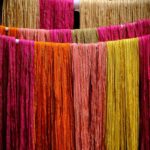
- Hand-painted or dyed surfaces require particular care to avoid fading — maker guidance on light exposure and cleaning should be sought at the point of purchase
For Andrea Vella Borg, the questions people ask about wearable art collecting are not obstacles to engagement — they are the beginning of it. Every serious question asked in good faith is a step towards the kind of informed, attentive collecting that produces something genuinely worth building.